
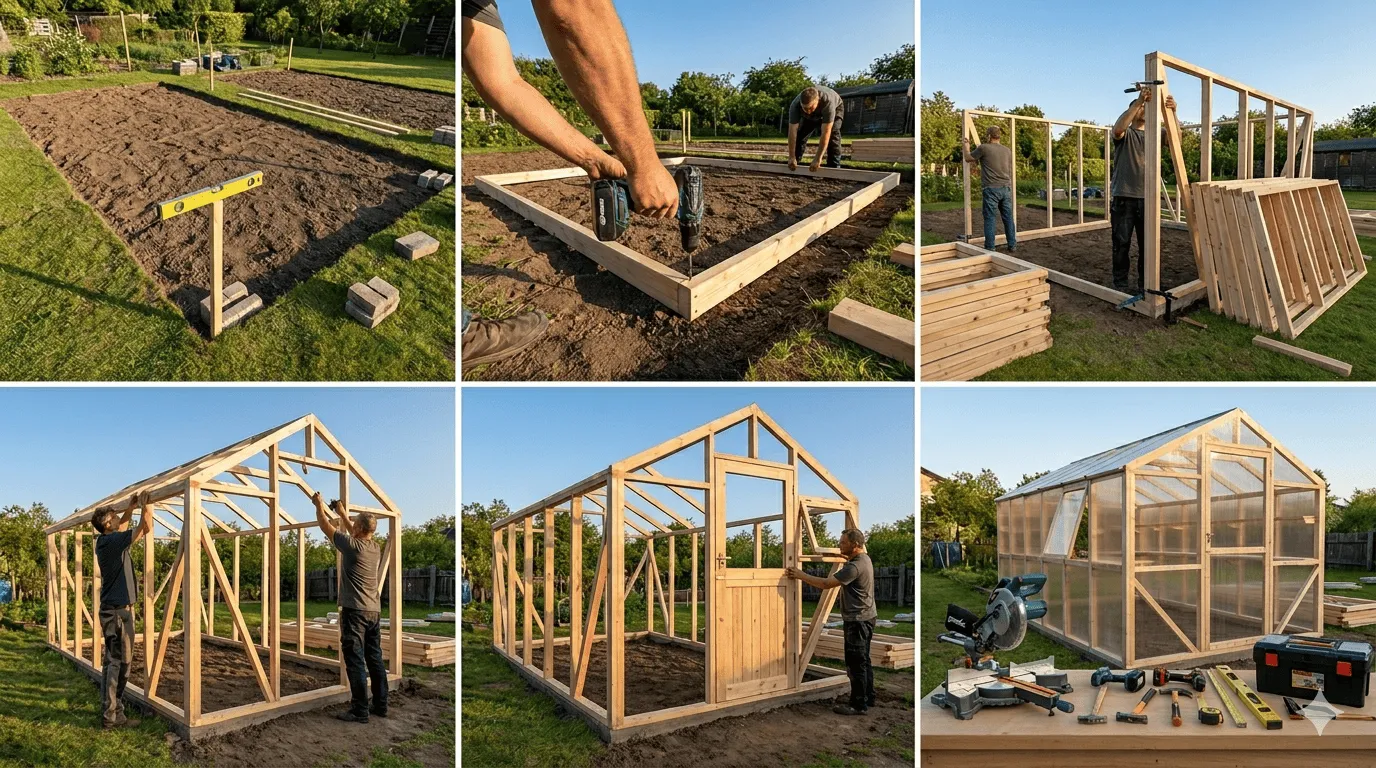
Build a low-carbon greenhouse
Learn how greenhouse construction connects to the GHG Protocol and how to build smarter for the planet
Building a greenhouse is one of the most rewarding projects a grower can undertake but in today's climate-conscious world, how you build it matters just as much as what you grow inside it. A well-designed greenhouse can actively reduce your carbon footprint and support the principles of the Greenhouse Gas (GHG) Protocol. This guide walks you through every step of building a greenhouse with sustainability at its core.
Greenhouses and greenhouse gases what's the connection?
Scope 1 Direct emissions
Heating your greenhouse with gas or oil burns fuel directly on-site
Scope 2 Energy emissions
Electricity used for grow lights, fans, and irrigation systems
Scope 3 Indirect emissions
Materials used to build the greenhouse — lumber, glass, plastic panels
Planning your sustainable greenhouse
Choose a location with maximum natural sunlight — at least 6 hours per day. This reduces reliance on artificial grow lights. Orient the greenhouse facing south to capture passive solar energy. The less electricity you use, the lower your Scope 2 emissions under the GHG Protocol.
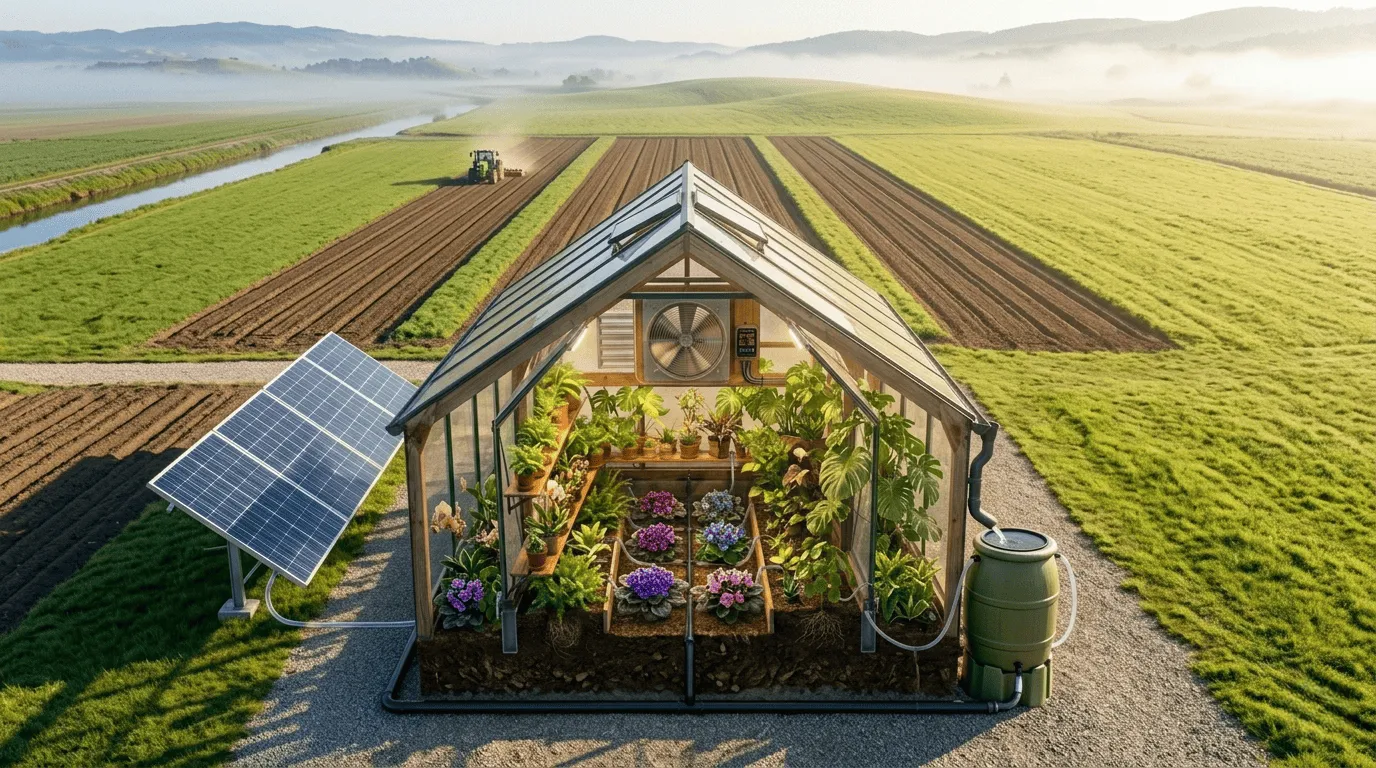
Every tonne of concrete produces approximately 0.9 tonnes of CO₂. Choosing alternative foundation materials for a small greenhouse can save hundreds of kilograms of emissions.
Choosing low-carbon building materials
Use reclaimed timber or FSC-certified lumber
instead of standard wood
Choose twin-wall polycarbonate panels
they insulate 30% better than glass
Source second-hand windows from salvage yards
zero embodied carbon
Use gravel or recycled aggregate
instead of concrete for the foundation
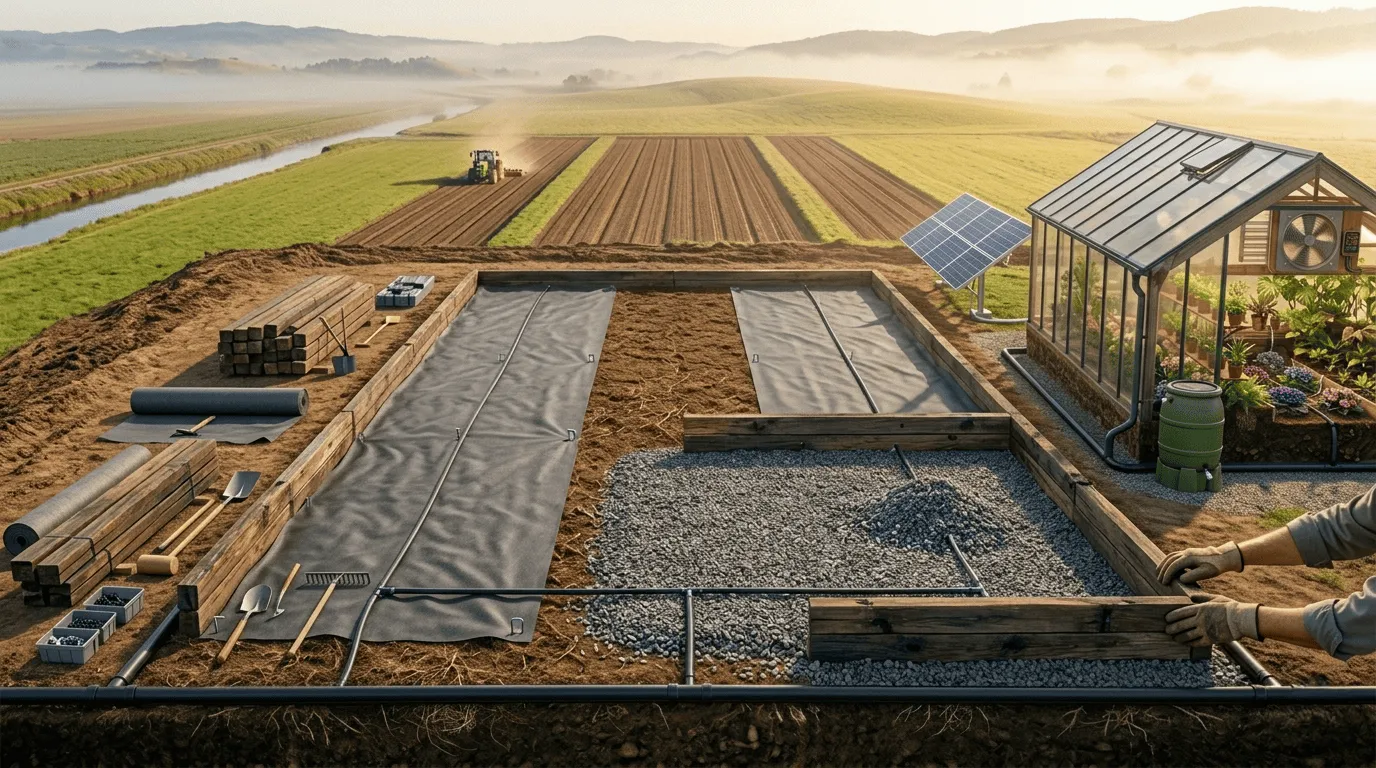
How to build a low-carbon foundation step by step
Clear 8 inches of topsoil and level the ground
Lay heavy-duty ground fabric to suppress weeds naturally
Add a 2-inch layer of recycled gravel as your base
Use reclaimed timber or concrete blocks for retaining walls
Fasten corners securely with timber screws — no concrete needed
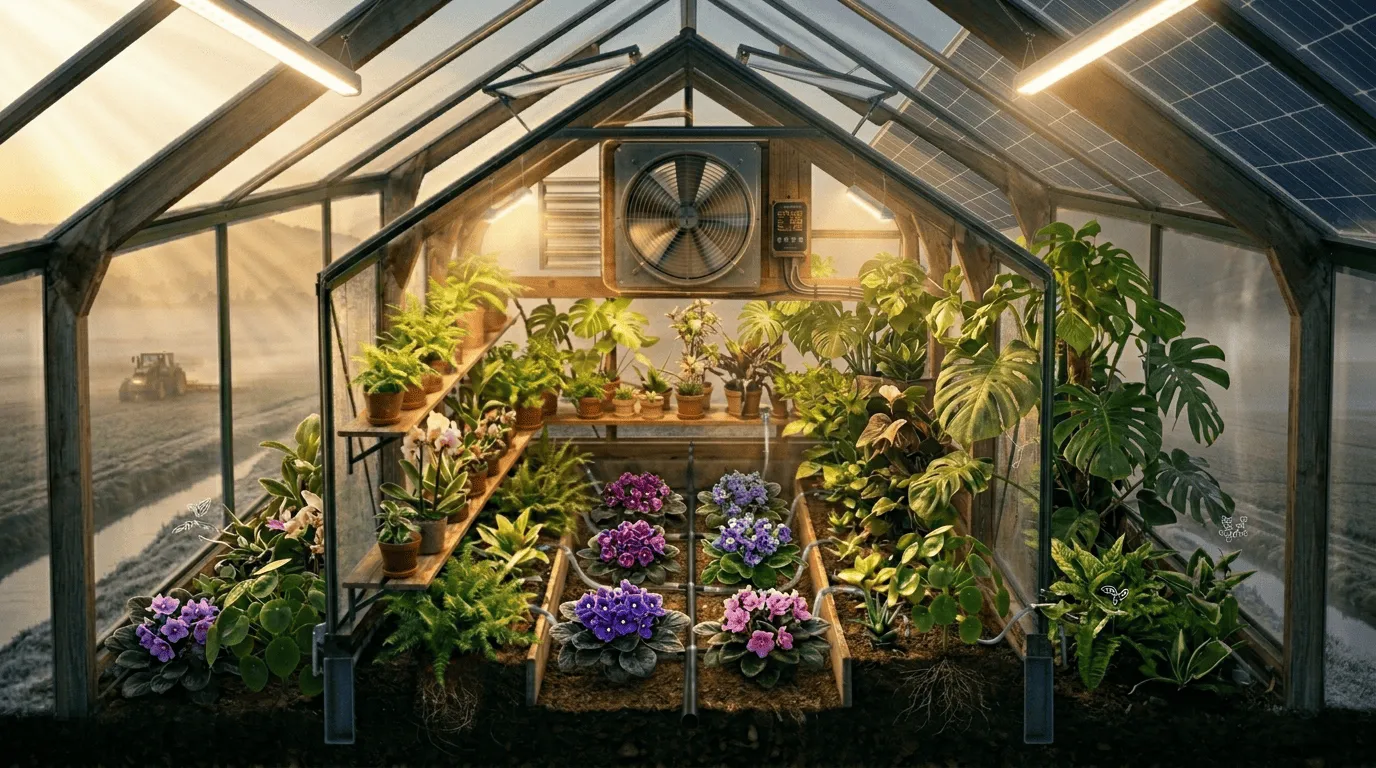
Energy-efficient interior setup
Install drip irrigation (uses 50% less water), LED grow lights (40–60% less energy than traditional lamps), automatic roof vents to regulate temperature passively, and consider a small solar panel to eliminate Scope 2 electricity emissions entirely.
Building sustainably — the bigger picture
A greenhouse built with sustainability in mind does more than grow plants — it becomes a working model of how we can reduce agricultural emissions in line with the GHG Protocol's goals. Whether you're a hobby grower or managing a larger operation, every choice you make in building your greenhouse contributes to the broader targets the GHG Protocol sets for the agriculture sector.