
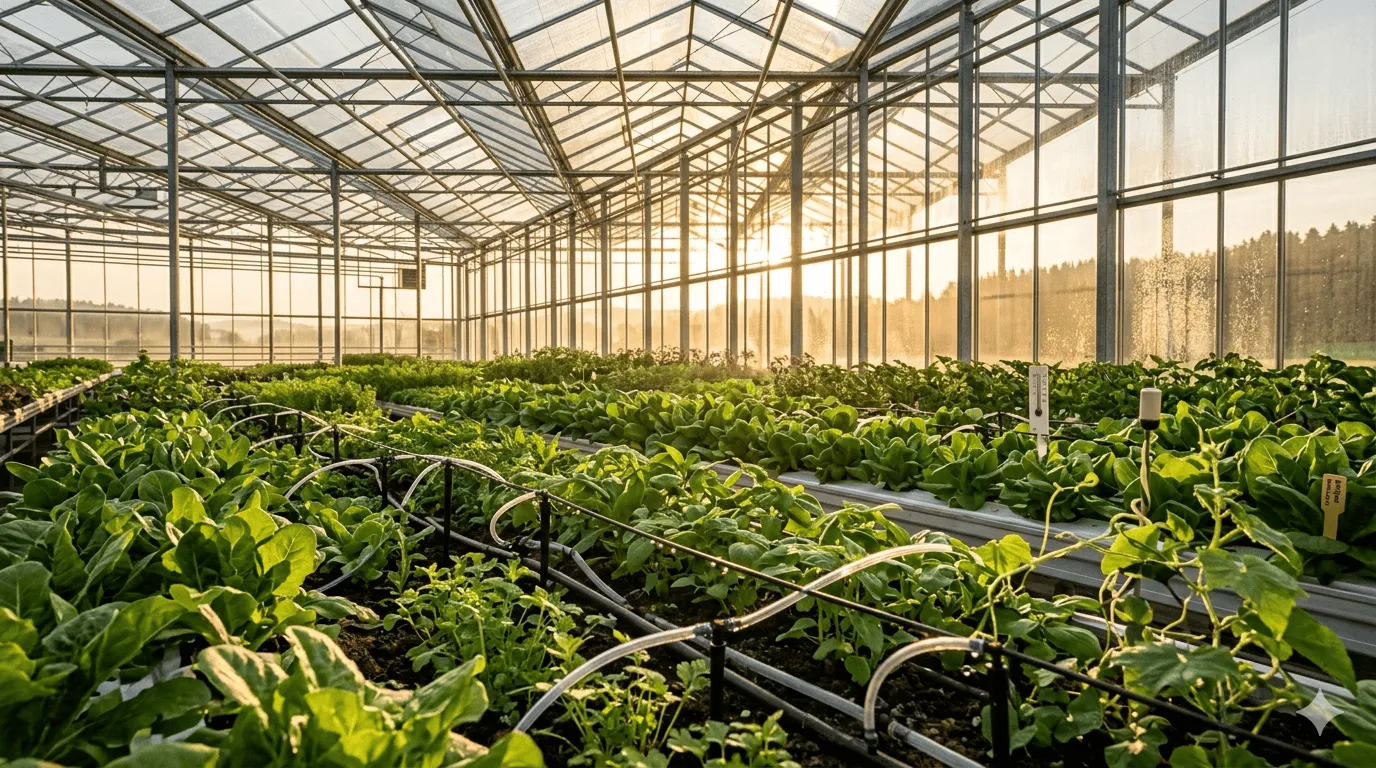
Irrigation and carbon savings
How you water your plants has a direct impact on your greenhouse's energy use, water waste, and greenhouse gas emissions. Here is what every grower needs to know.
Water and energy are the two biggest operational costs in any greenhouse and they are also the two biggest sources of greenhouse gas emissions from growing operations. The way you irrigate your greenhouse directly affects both. Inefficient watering wastes water, which requires energy to pump, treat, and heat. That energy consumption generates Scope 2 emissions under the Greenhouse Gas (GHG) Protocol. By switching to smarter irrigation systems and tools, greenhouse growers can dramatically reduce both their water use and their carbon footprint — while also improving plant health and reducing costs.
Why irrigation is a GHG Protocol issue
Under the GHG Protocol, greenhouse gas emissions from a growing operation are tracked across three scopes. Water management affects two of them directly. Scope 1 emissions come from on-site energy use including gas or oil-powered heating systems that warm the water used for irrigation. Scope 2 emissions come from the electricity used to pump, filter, and distribute water through your greenhouse. Every litre of water you waste is a litre that required energy to move and that energy has a carbon cost. Reducing water waste through smarter irrigation is therefore not just good growing practice — it is a direct emissions reduction strategy.
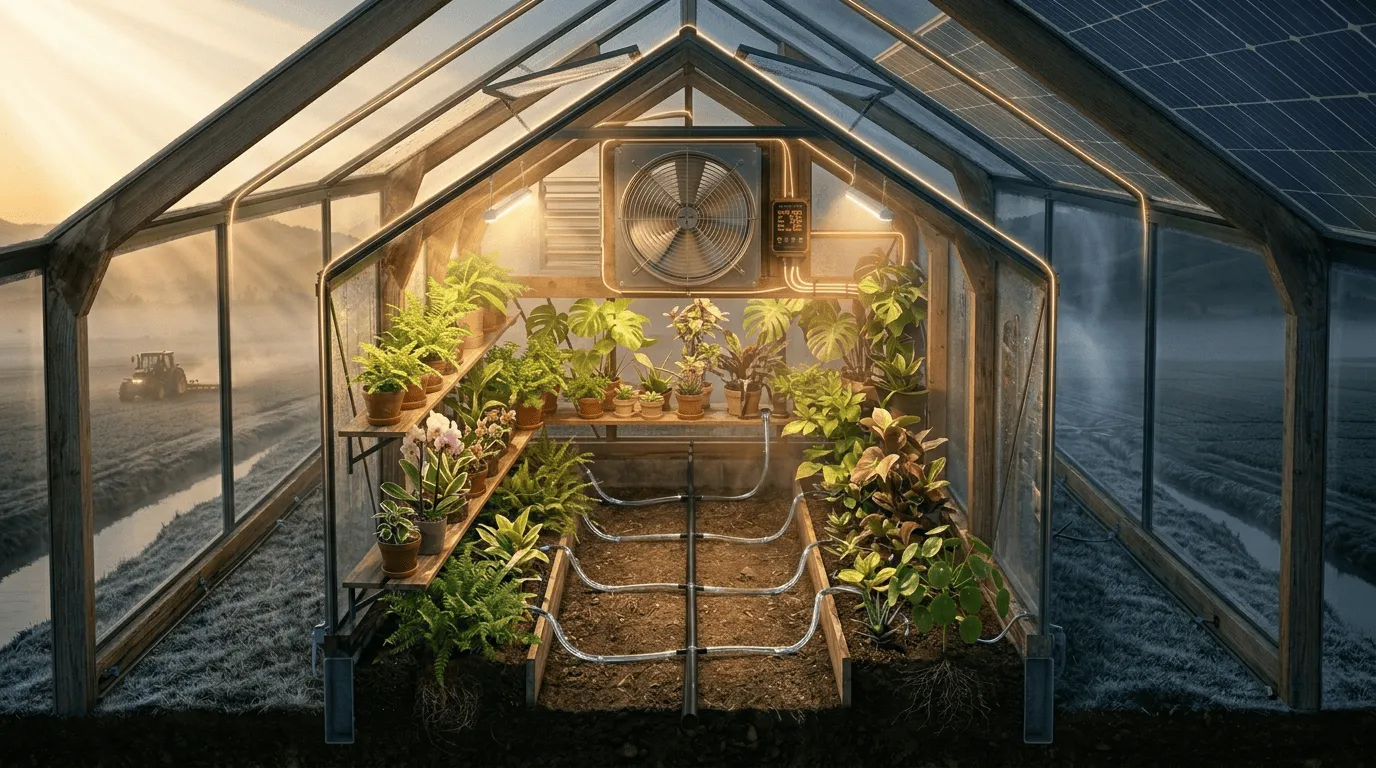
Essential greenhouse irrigation tools and their carbon impact
Drip irrigation systems (Highest carbon saving)
Original tip: delivers water directly to roots, minimises waste, highly useful in greenhouse settings. GHG impact: Drip irrigation is the single most effective tool for reducing water-related emissions in a greenhouse. By delivering water precisely at root level, it eliminates the energy wasted pumping excess water that evaporates or runs off. Studies show drip systems reduce water consumption by up to 50% compared to overhead watering — cutting the pumping energy and associated Scope 2 emissions by the same proportion. Under the GHG Protocol, this reduction is fully measurable and reportable.
Humidity monitoring tools (Prevents over-watering emissions)
Original tip: electronic sensor stations measure moisture levels, prevent mold and mildew from forming on plants and structure. GHG impact: Over-watering is one of the most common sources of unnecessary energy use in greenhouses. When humidity gets too high, growers often run electric fans or ventilation systems to compensate — consuming additional electricity and generating Scope 2 emissions. A humidity monitoring system prevents this by giving growers precise real-time data, so watering decisions are based on actual plant needs rather than guesswork. This directly reduces unnecessary energy consumption.
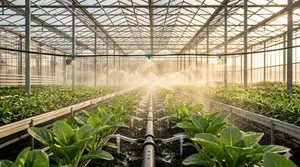
Greenhouse misting systems (Lower emissions than hosepipes)
Original tip: misting systems are a perfect alternative to garden hoses, which spray water too fast and can wash soil away from roots, exposing them to disease. GHG impact: Misting systems use significantly less water than garden hoses for the same coverage area — reducing the volume of water that needs to be pumped, treated, and heated. They also cool the greenhouse air through evaporation, which in hot months can reduce or eliminate the need for electric cooling fans. Replacing a fan-based cooling system with a misting system can reduce Scope 2 electricity emissions from cooling by up to 40%.
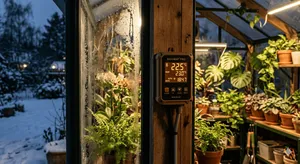
Heating and temperature tools (Direct Scope 1 emissions source)
Original tip: heaters with thermostats keep temperature ideal for plants, thermostats allow close regulation and adjustment. GHG impact: Heating is typically the largest single source of Scope 1 emissions in a greenhouse — especially those using gas or oil boilers. Every degree of unnecessary heating is a direct GHG emission. Smart thermostats that regulate temperature precisely rather than running heating systems continuously can reduce fuel consumption by 15–25%. Pairing a smart thermostat with efficient irrigation that avoids over-watering (which cools the greenhouse and triggers more heating) creates a compounding carbon saving.
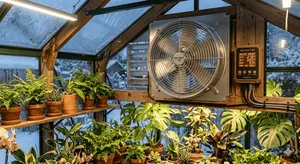
Ventilation and fan tools (Scope 2 electricity emissions)
Original tip: fans for proper ventilation control humidity by removing warm moist air and bringing in cool dry air. Some plants grow sturdier stems with air movement. GHG impact: Electric fans are a significant source of Scope 2 emissions in greenhouses that rely on them for year-round climate control. The key to reducing fan-related emissions is reducing the need for fans in the first place — which comes back to smart irrigation. When watering is precise and humidity is well-managed, fans run less frequently. Installing automatic roof vents that open passively when temperatures rise is a zero-electricity alternative to electric fans for temperature management during summer months.
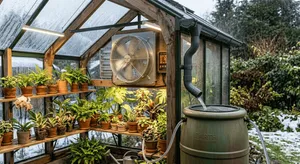
Rainwater collection systems (Eliminates mains water emissions)
Original tip: not in the original article — this is new content added to strengthen the GHG angle. GHG impact: Mains water supply has a carbon footprint — it requires energy to pump, treat, and distribute through municipal systems. By collecting rainwater and using it for greenhouse irrigation, growers can eliminate this Scope 3 supply chain emission entirely. A simple 1,000-litre water butt connected to a greenhouse roof can collect enough rainwater to supply a small greenhouse through spring and summer, saving both money and carbon. This is one of the easiest and lowest-cost GHG reductions available to any greenhouse grower.
How to audit your greenhouse irrigation for carbon emissions
Measure your current water use
install a simple water meter on your supply line and record weekly usage for one month to establish your baseline
Identify your water sources
note how much comes from mains supply vs rainwater collection, as mains water carries a higher carbon cost
Check your heating system
is your irrigation water heated? If so, record the fuel type and volume used, as this is a direct Scope 1 emission
Review your pumping setup
electric pumps running inefficiently or unnecessarily are a hidden Scope 2 emission source. Timer-controlled pumps reduce this significantly
Calculate and report
use the GHG Protocol's agricultural guidance to convert your water and energy data into CO₂ equivalent figures and set a reduction target for the following year
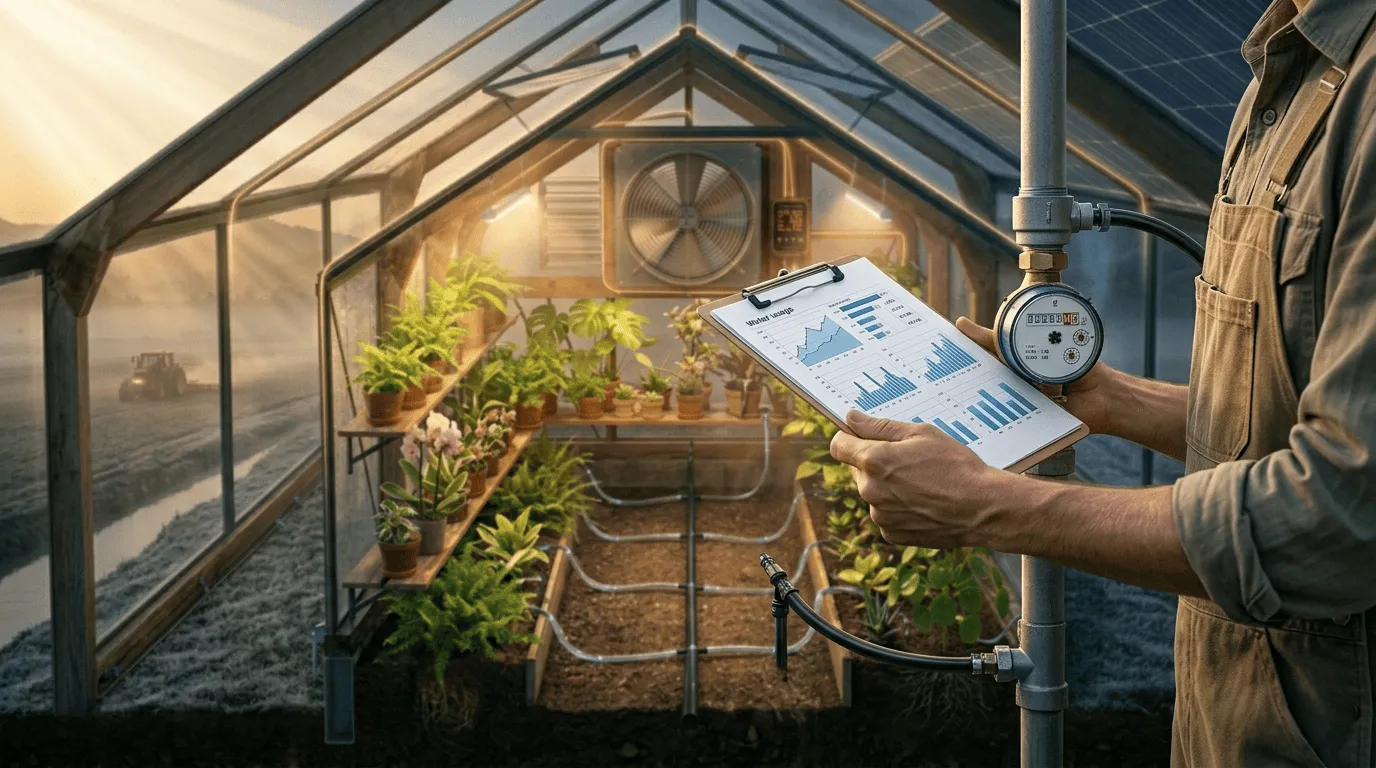
Every drop counts for your plants and for the planet
The tools and systems you use to water your greenhouse are not just about keeping plants healthy they are a direct expression of how seriously you take your operation's environmental impact. From drip irrigation to rainwater harvesting, every smart water decision reduces the energy your greenhouse consumes and the carbon it emits. For growers who want to go further, the GHG Protocol provides a clear framework for measuring these reductions formally and setting targets that demonstrate real climate leadership.