
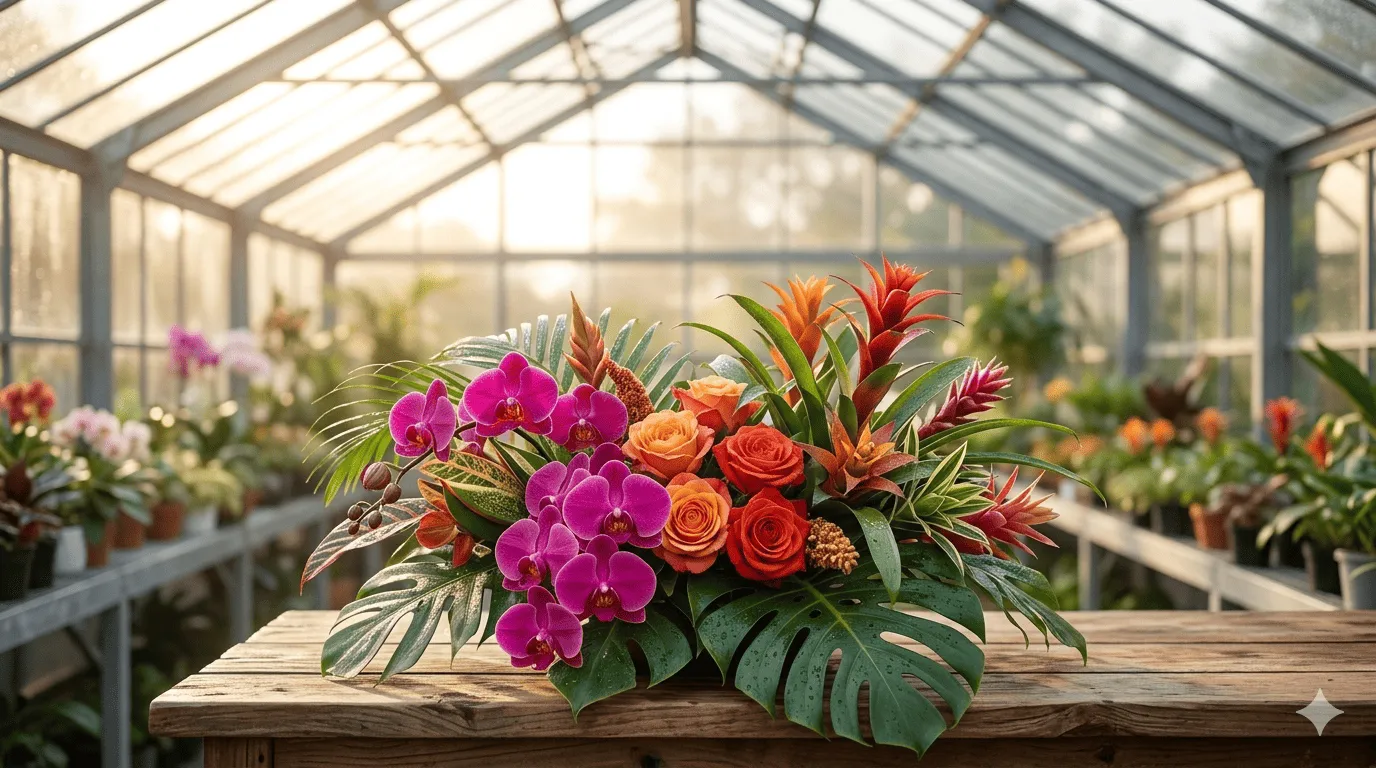
Plants and flowers that absorb CO₂
Growing the right plants in your greenhouse doesn't just produce beauty — it actively removes carbon dioxide from the air. Here is what every grower needs to know.
One of the greatest benefits of growing plants in a greenhouse is the ability to cultivate blooming species year-round. But beyond their beauty, many greenhouse plants play a meaningful role in absorbing carbon dioxide (CO₂) from the air a process known as carbon sequestration. Under the Greenhouse Gas (GHG) Protocol, biological carbon sequestration through plants and growing operations is recognised as a measurable offset to emissions. This means your greenhouse is not just a growing space — it is an active participant in climate action. Here are the most popular greenhouse flowers and exactly how each one contributes to CO₂ absorption.
6 greenhouse plants and their CO₂ absorption what the science says
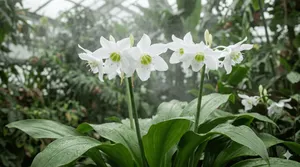
Amazon Lilies - CO₂ absorber (moderate)
Original growing tip: tropical bulb, needs 70°F minimum, use containers, avoid overwatering, needs 8 hours of light daily. Climate science to add: Amazon Lilies are C3 photosynthesis plants — meaning they absorb CO₂ continuously during daylight hours. In a well-lit greenhouse maintaining the required 70°F temperature, a single lily plant can absorb approximately 150–200g of CO₂ per year. Their large white blossoms and high transpiration rate also help regulate greenhouse humidity, reducing the need for energy-intensive climate control systems.
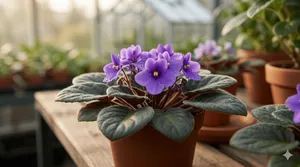
African Violets - CO₂ absorber (steady low-level)
Original growing tip: low nutrient soil, high humidity, avoid getting leaves wet, use leaf cuttings to propagate. Climate science to add: African Violets are compact but highly efficient photosynthesisers relative to their size. Because they thrive in high humidity — which greenhouses provide naturally — they maintain active CO₂ absorption year-round. Their ability to be propagated from leaf cuttings means one plant can produce many more CO₂ absorbers over time, multiplying the climate benefit of a single original plant.
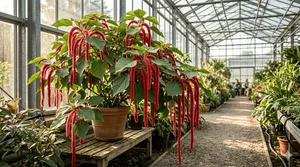
Chenille Plants - CO₂ absorber (high-large biomass)
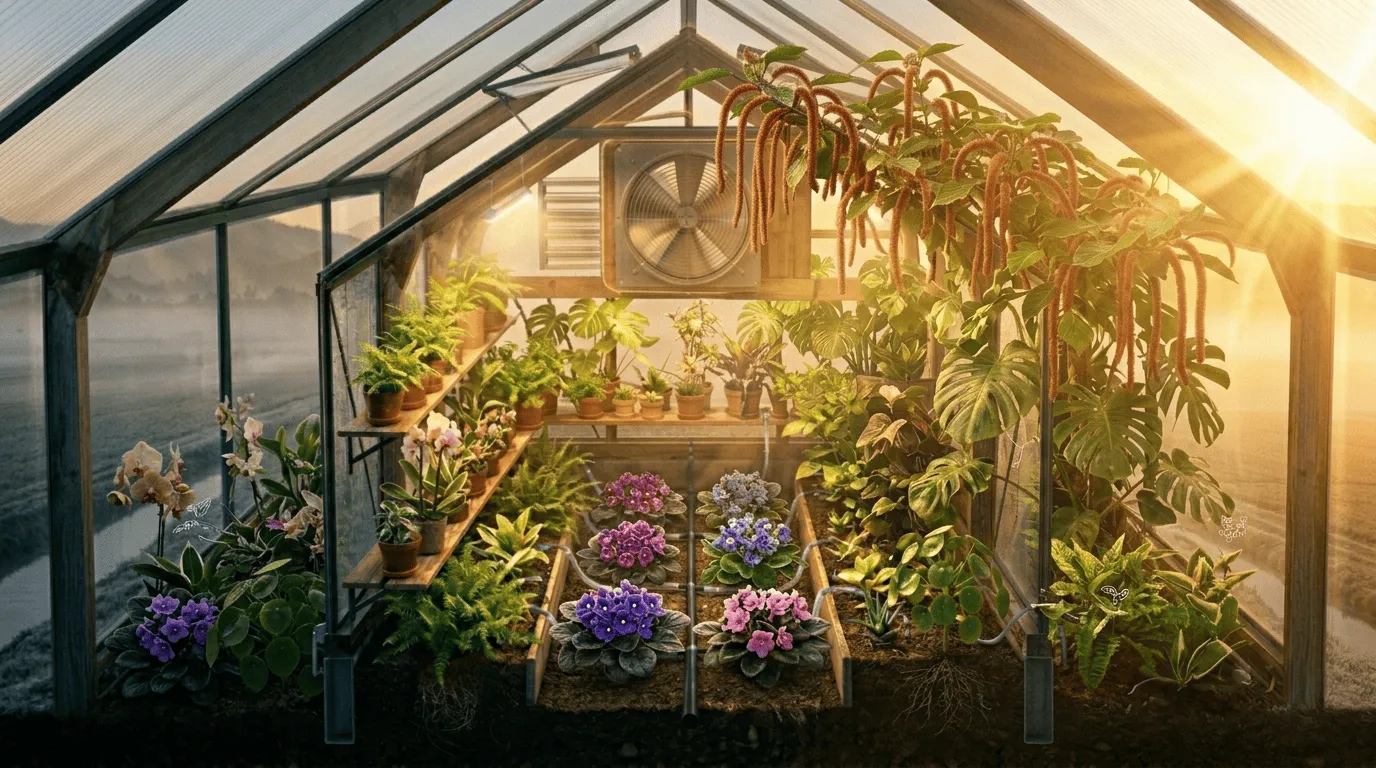
Original growing tip: can reach 6 feet tall, produces long bright red cattail flowers, bushy and shrub-like. Climate science to add: Chenille Plants are among the most effective CO₂ absorbers on this list purely due to their size. Larger plant biomass means more leaf surface area available for photosynthesis — the process by which plants convert CO₂ and sunlight into oxygen and glucose. A mature Chenille Plant at 6 feet can absorb significantly more CO₂ per year than smaller species, making it one of the best climate-friendly choices for greenhouse growers with space to spare.
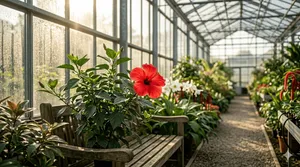
Chinese Hibiscus - CO₂ absorber (high activity rate)
Original growing tip: sensitive to temperature drops, blooms come in orange, yellow, red, pink, white — blooms last 24 hours, needs nutrient-rich soil and regular watering. Climate science to add: The Chinese Hibiscus is a fast-growing, high-metabolism plant — meaning it processes CO₂ at a higher rate than slower-growing species. Because it requires stable warm temperatures (which a greenhouse provides), it maintains active photosynthesis throughout the year rather than entering dormancy in winter. This makes it a particularly valuable year-round CO₂ absorber in controlled growing environments. Its rapid bloom cycle also means high organic matter production, which returns carbon to the soil.
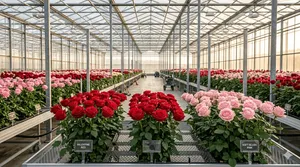
Roses - CO₂ absorber (consistent year-round)
Original growing tip: need stable 70–80°F, full day of sunlight or grow lights, come in many varieties, feed regularly with flower-specific nutrients. Climate science to add: Roses are one of the most widely grown greenhouse plants in the world — and their collective CO₂ absorption is significant at scale. A single greenhouse rose plant absorbs an estimated 200–400g of CO₂ per year under optimal growing conditions. Commercial rose greenhouses, which house thousands of plants, contribute measurable carbon sequestration that can be formally reported under the GHG Protocol's biological offset guidelines. Even a small hobby greenhouse with 20 rose plants absorbs several kilograms of CO₂ annually.
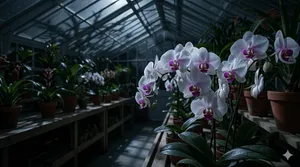
Orchids - CO₂ absorber (unique night cycle)
Original growing tip: most sensitive flower, needs 70–80°F daytime, drop to 50–60°F at night, thrive in humid conditions, very precise temperature requirements. Climate science to add: Orchids are particularly fascinating from a climate science perspective because many species use CAM photosynthesis — a special process where they absorb CO₂ at night rather than during the day. This is an adaptation to conserve water in their natural tropical habitats. In a greenhouse setting, this means orchids are actively absorbing CO₂ during hours when most other plants are not — making them an ideal complement to daytime CO₂-absorbing species for a greenhouse that operates as a round-the-clock carbon sink.
How to maximise CO₂ absorption in your greenhouse
The rate at which your plants absorb CO₂ depends directly on the conditions inside your greenhouse. To maximise carbon sequestration, focus on three things: light, temperature, and plant density. More light means more photosynthesis — which means more CO₂ absorbed. Maintaining stable temperatures removes the stress that causes plants to slow their metabolism. And planting at higher densities — combining tall species like Chenille with compact species like African Violets — ensures every square metre of your greenhouse is actively working to absorb carbon. Under the GHG Protocol, these optimised growing conditions can be documented and reported as part of a formal carbon management strategy.
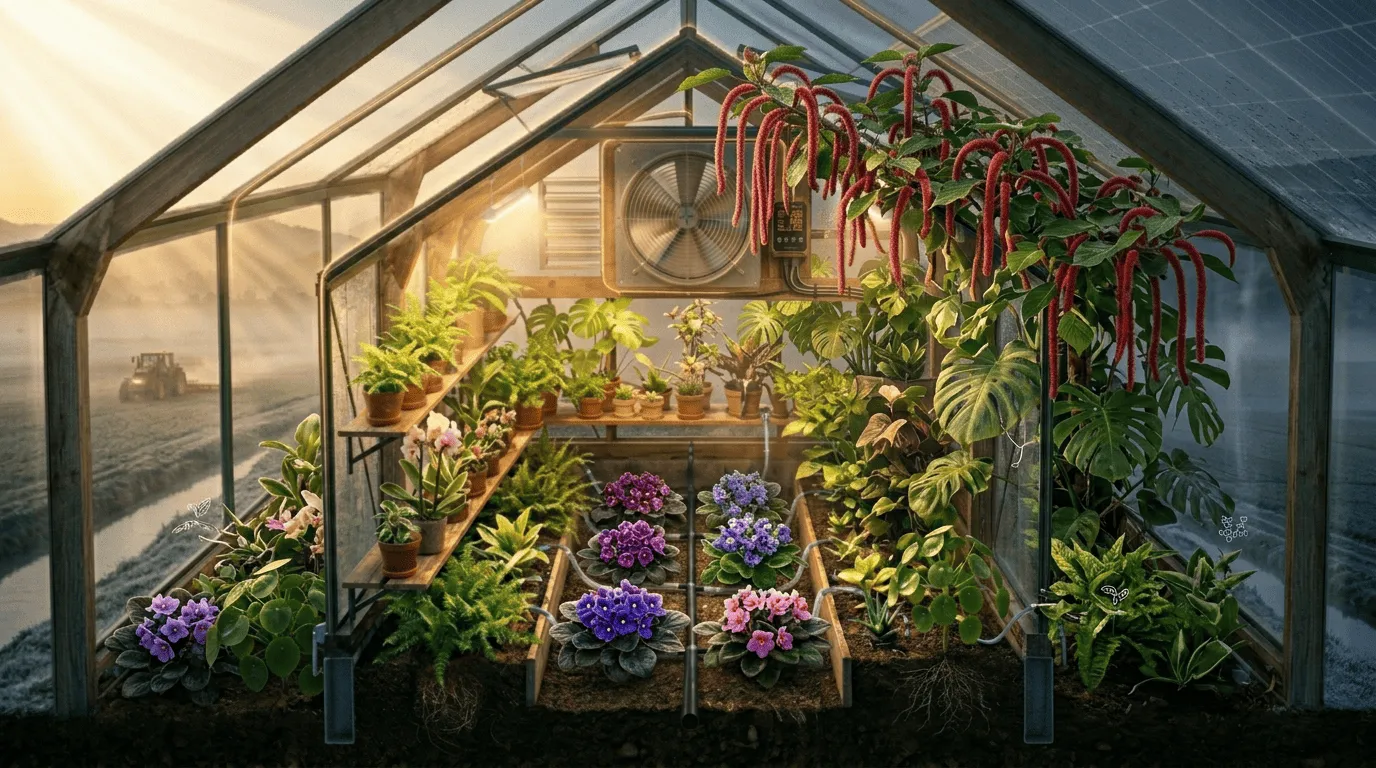
5 practical tips to increase your greenhouse's carbon absorption
Maximise natural light
position your greenhouse facing south and keep panels clean to allow maximum sunlight through for peak photosynthesis rates
Mix plant sizes
combine tall large-leaf plants like Chenille with smaller compact species to cover all layers of growing space efficiently
Maintain stable temperatures
temperature fluctuations stress plants and reduce photosynthesis activity, cutting CO₂ absorption rates significantly
Add orchids for night coverage
their CAM photosynthesis cycle means CO₂ is being absorbed even after dark, making your greenhouse a 24-hour carbon sink
Track and document
use the GHG Protocol's biological sequestration guidelines to formally record your greenhouse's CO₂ absorption as part of your carbon footprint report
Your greenhouse — a small but real climate solution
Every plant you grow in your greenhouse is quietly doing something remarkable pulling carbon dioxide out of the air and locking it into living tissue. While no single greenhouse will solve the climate crisis alone, the collective impact of millions of growers making climate-conscious choices is meaningful and measurable. Whether you are growing roses for their beauty or orchids for their challenge, you are also growing a contribution to a lower-carbon world.